
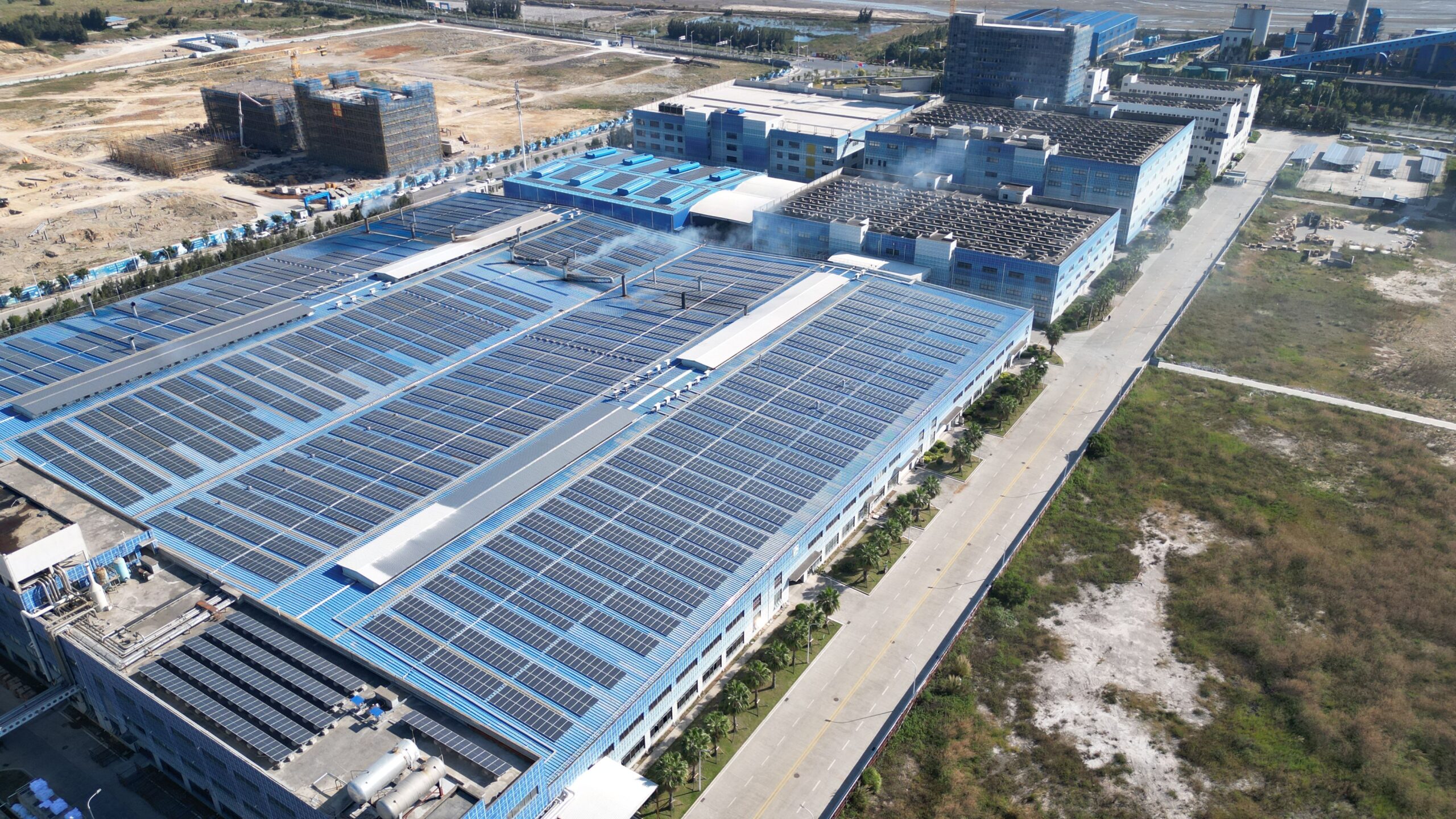
Most business owners know two ways to pay for solar: write a check, or take a bank loan. There’s a third option that many Midwest property owners and developers have never heard of, and it can be a game-changer for the right project: C-PACE.
This guide explains what PACE and C-PACE are, how the financing works, how it fits alongside tax credits and grants, and how it compares to a PPA or a conventional loan.
What is PACE (and C-PACE)?
PACE stands for Property Assessed Clean Energy. It’s a financing structure authorized by state law that lets property owners fund energy improvements, such as solar, and repay them through a special assessment on the property, collected alongside property taxes.
C-PACE is the commercial version (industrial, office, retail, multifamily, agricultural, nonprofit, and mixed-use properties). Residential PACE is a separate program with different rules.
The key idea: the financing attaches to the property, not to your company’s credit. The capital comes from a private lender or program administrator, and the repayment obligation runs with the building.
How C-PACE financing works
- Eligibility. The property must be in a municipality or county that has authorized a C-PACE program, and the project must be an eligible improvement (solar, efficiency upgrades, and in many programs, batteries and other energy measures).
- Lender consent. If you have a mortgage, your existing lender generally must consent to the new assessment lien. This is often the step that takes the most coordination.
- Financing. A capital provider funds the project, often covering most or all eligible costs including design, equipment, and installation, and sometimes soft costs and closing fees, subject to program limits.
- Installation. The solar system is built and commissioned.
- Repayment. You repay through a special assessment on your property tax bill over a fixed term, often 20 to 30 years, typically at a fixed rate.
Because the term can approach the life of the system, annual payments can be low enough that energy savings exceed the assessment payment from the first year, meaning solar is cash-flow positive with no money down.
Why developers and owners like C-PACE
- Long terms, fixed rates. Terms of 20 to 30 years are common, longer than most commercial bank loans.
- Little or no upfront cash. Financing can cover most or all project costs.
- Non-recourse in nature. The assessment is tied to the property, not a personal or corporate guarantee. Details vary by program.
- Speed to fund the whole project. With federal solar tax-credit deadlines approaching, being able to finance a complete project without tying up corporate capital helps get systems built and operating in time.
- Transferable to the next owner. If the property sells, the assessment generally stays with the building and the new owner benefits from the system. That’s a major advantage over loans that must be paid off at sale.
- Matches costs to benefits. For tenant-occupied buildings, assessments can often be passed through to tenants in line with the savings they receive (check your lease structure).
- You keep ownership. Unlike a PPA, you own the system and the incentives that come with it.
- Doesn’t compete with your credit lines. Because it’s a property-secured assessment, it generally doesn’t tie up your corporate borrowing capacity (though your accountant should review treatment on your financial statements).
How C-PACE fits with tax credits, grants, and ownership
This is where C-PACE becomes powerful. Because you own the system, you can generally stack:
- The federal commercial solar tax credit (Section 48E). Under the 2025 federal budget law, the credit ends for solar placed in service after December 31, 2027, unless construction began by July 4, 2026. That start date has passed, so for most projects that haven’t started, the practical deadline is getting the system built and operating by the end of 2027. Rules on what counts as “beginning construction” have shifted (a June 2026 court ruling vacated Treasury guidance that had narrowed the 5% safe harbor, and further guidance or an appeal is possible), and new foreign-sourcing (FEOC) limits apply to projects starting construction after 2025. See our guide to safe harbor for commercial solar tax credits and confirm eligibility with your tax advisor.
- Depreciation benefits. 100% bonus depreciation was made permanent in 2025, but how it applies to a specific project is a question for your CPA.
- Grants, when available. USDA REAP grants, which used to cover a meaningful share of costs for rural businesses and agricultural producers, are currently paused while USDA rewrites the program, and a rule taking effect October 16, 2026 restricts solar eligibility (including ground-mount systems on farmland) and changes how applications work. Guaranteed loans have remained open. Check current status before counting on grant dollars.
- Utility bill savings, which offset the assessment payment.
C-PACE can also help you hit the tax-credit deadline, because it lets you fund the whole project without waiting on internal capital approvals. But note that C-PACE approvals commonly take roughly 60 to 120 days (including mortgage lender consent), so start early. Lender rules on how tax benefits can be used to pay down obligations vary, so structure it up front.
C-PACE vs. PPA vs. bank loan
| C-PACE | Solar PPA | Bank loan / cash | |
|---|---|---|---|
| Upfront cost | Often $0 | $0 | Down payment or full cash |
| Who owns the system | You | Developer | You |
| Term | 20 to 30 years typical | 15 to 25 years | 5 to 15 years |
| Tax credit / depreciation (if the project qualifies) | You | Developer | You |
| Grants (when available) | Available to owner | Usually not | Available to owner |
| Collateral | Property assessment | System ownership by developer | Business assets / property / guarantees |
| Transfers with property sale | Yes, typically | Contract transfer | Usually repaid at sale |
| Mortgage lender consent | Required | Often required | Varies |
For many projects, C-PACE combines what’s attractive about a PPA (no money down, long term) with what’s attractive about ownership (you keep the incentives and the lifetime savings). See also our guide to commercial solar PPAs.
Availability in Michigan, Ohio, and Illinois
C-PACE is authorized by state law, but it’s activated locally, so availability depends on your county or municipality.
- Michigan: PACE is administered statewide by Lean & Green Michigan, and counties and municipalities opt in. As of early 2024 it covered 58 local governments and more than 75% of Michigan’s population. Many counties participate, but confirm yours on the program’s website.
- Ohio: Ohio PACE runs through Energy Special Improvement Districts (ESIDs) created by local governments, with assessments levied on the property. Participation and program administrators vary by city, county, and region.
- Illinois: The Illinois Finance Authority launched a statewide C-PACE program in October 2022, built on state law that lets counties, cities, villages, and incorporated towns create PACE areas at the request of commercial, industrial, and multifamily (5+ units) owners. Several counties (Cook, Will, and others) have launched their own programs. Financing limits are set by statute as a share of property value, so ask your administrator what applies to your project.
Program rules, fees, and administrators change, and the details differ by jurisdiction, so we confirm local eligibility for each project at the start.
What to watch out for
- Mortgage lender consent. Start this conversation early. It’s the most common source of delay.
- Fees and rates. Compare the all-in cost (interest rate, administrative and closing fees) against other options. C-PACE is not always the cheapest money, but it’s often the longest and most flexible.
- Senior lien position. An assessment generally takes priority over existing mortgages, which is why lenders must consent. Missed payments can lead to a tax-lien process on the property.
- Prepayment terms. Some programs have penalties or lockouts for paying off early.
- Project eligibility. Not every cost or equipment type qualifies in every program.
- Tenant leases. If you’re a landlord, make sure lease language allows pass-through of assessments where appropriate.
Who is C-PACE a good fit for?
- Property owners who want to go solar with no cash outlay, and keep the incentives.
- Developers and investors with long hold periods, where the assessment transfers with the asset and supports property value and tenant retention.
- Owners of mid-size to large facilities, because C-PACE has closing costs that make it more efficient for larger projects. As a rough guide, projects under a few hundred thousand dollars may find other options more cost-effective.
- Rural and agricultural businesses, where PACE can be paired with other funding sources (note that USDA REAP grants are currently paused, so confirm what’s available).
- Businesses planning to stay put or sell eventually, since the assessment can transfer to a new owner.
A simple example (illustrative only)
Say a manufacturer installs a solar system costing $1.2 million.
- C-PACE funds the project over 25 years at a fixed rate.
- The annual assessment payment is lower than the first-year electricity savings.
- The business keeps the tax benefits it qualifies for.
- If the building is sold later, the assessment and the lower energy bill move with it.
Numbers vary widely by project, incentives, utility rates, and program terms. Your results will differ.
The bottom line
C-PACE won’t suit every project, but for the right facility it’s one of the most effective ways to turn solar into an immediate cash-flow benefit while preserving ownership and incentives. The best approach is to model every option (cash, loan, lease, PPA, and C-PACE) against your actual utility bills and tax position, then choose the structure with the strongest 25-year result.
SunMatic Solar® designs and installs commercial and industrial solar across Michigan, Ohio, and Illinois, and we help clients navigate incentives and financing structures. We’ll run the numbers with you and confirm what’s available for your property.
Claim your free estimate or call (231) 683-2111.
Frequently asked questions
What does C-PACE stand for?
Commercial Property Assessed Clean Energy. A financing program that’s repaid through a special assessment on commercial property.
Is C-PACE a loan?
Functionally it’s financing, but it’s structured as an assessment on the property rather than a traditional corporate loan.
Can C-PACE pay for 100% of a solar project?
Often it can cover most or all eligible costs, depending on the program, the property’s value, and lender requirements.
Do I need my mortgage lender’s approval?
In most cases, yes. Your existing lender typically must consent because the assessment has lien priority.
What happens if I sell my property?
The assessment usually stays with the property and transfers to the new owner. Some owners choose to pay it off at sale. Terms vary.
Can I use C-PACE with the federal tax credit?
Since you own the system, you can generally pursue available incentives alongside C-PACE financing. The federal solar credit requires the system to be placed in service by December 31, 2027 unless construction began by July 4, 2026, so timing is critical. Confirm eligibility and lender requirements for your project.
Can I still get a USDA REAP grant?
REAP grant awards were paused in 2026 while USDA rewrites the program, and new rules take effect October 16, 2026. Guaranteed loans have remained open. Check USDA’s current status before planning around a grant.
How long does C-PACE take?
Approvals commonly take about 60 to 120 days, depending on the program and your mortgage lender. Start early if you’re working against the 2027 tax-credit deadline.
Is C-PACE available in my county?
It depends on whether your local government has opted in. We check this at the start of every project.
How is C-PACE different from a PPA?
With a PPA, a third party owns the system and keeps the incentives while you buy power. With C-PACE you own the system and keep the incentives, and repay financing through your tax bill.
Last updated: October 2026. This article is general information, not tax, legal, or financial advice. Programs, incentives, and regulations change; consult qualified advisors and your local C-PACE administrator.